Insurance Claim Coordination work starts with verified roof conditions, clear repair limits, and a practical decision path for the building owner.
Insurance Claim Coordination roof scope
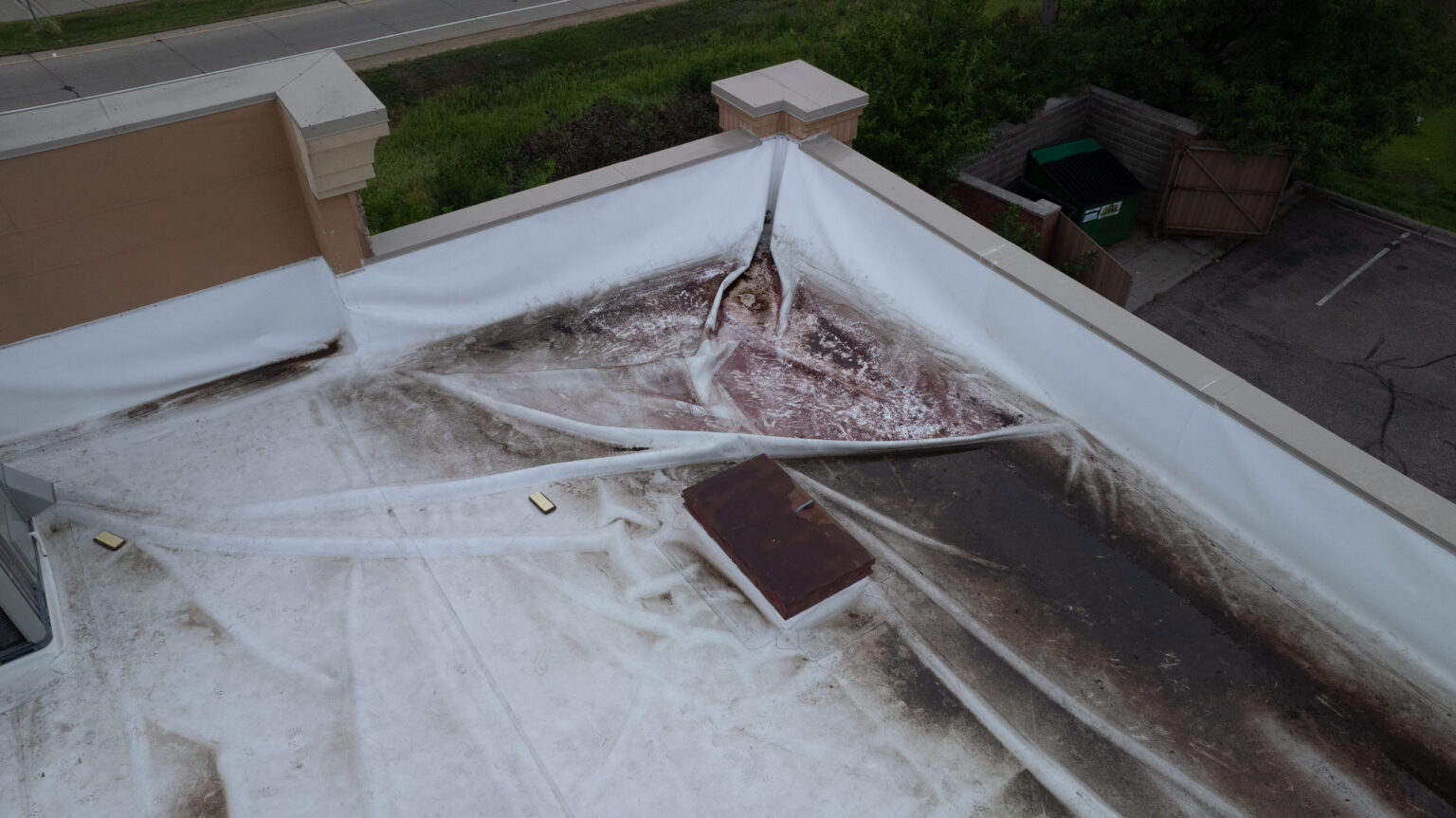
Insurance claim coordination on a commercial roof means one thing on our end: the roof gets documented, measured, and photographed to the standard an adjuster expects, and someone from our crew is on the roof when the carrier's adjuster is there.
We are the roofing contractor on the claim, not a public adjuster and not the owner's negotiator with the carrier. That distinction matters because it defines what we actually deliver: a documented roof condition report, an inspection scheduled to match the adjuster's visit, a full repair scope that accounts for code-required upgrades and material matching, and a presence on the roof so the technical conversation happens between people who know roofing.
Commercial adjusters covering Central Arkansas are often working a full slate of properties after a regional storm event, and coordination starts with getting our inspection done before that visit so we already know the roof when the adjuster arrives. We walk the same roof areas, point to the same conditions, and can answer field-level questions about membrane type, fastening, and flashing detail.
Every coordination job produces the same base file: dated photos organized by roof area, a written condition summary, moisture readings where relevant, and a scope that separates required repair from recommended and optional work. That file follows the claim through its life, from the initial adjuster meeting through any supplemental review.
Central Arkansas commercial roofs run from older built-up systems downtown and around the state-government corridor to newer TPO and PVC membrane on retail and office buildings along Chenal Parkway, with industrial roofs along the Arkansas River near the Port of Little Rock carrying their own access and equipment considerations. Spring severe-weather season is when most claim volume moves through the region.
Commercial claims often involve more than one decision-maker: a property manager handling day-to-day communication, an ownership group or REIT approving repair authorization, and sometimes a lender with its own documentation requirements. We keep the roof file organized so it can be shared across that group without rewriting it for each audience.
We're your roofing contractor, not a public adjuster: we document and substantiate the roof damage so you and your adjuster work from an accurate, complete scope.
Planning Questions
Do you file the insurance claim for me?
No. We document the roof condition and can meet the adjuster on-site, but filing the claim and negotiating settlement terms are between you and your insurance carrier.
Will someone be on the roof with the adjuster?
Yes, when scheduling allows. Having a roofing contractor present during the adjuster's visit keeps the technical conversation grounded in specific field conditions.
What if the adjuster's scope misses something?
We compare our documentation against the adjuster's scope and can flag specific items, flashing, edge metal, code upgrades, that may have been missed, backed by our own photos and notes.
How long does the documentation and coordination process take?
A roof inspection and report typically takes one visit; coordinating around an adjuster's schedule can add a few days to a couple of weeks depending on the carrier's backlog after a regional storm.