
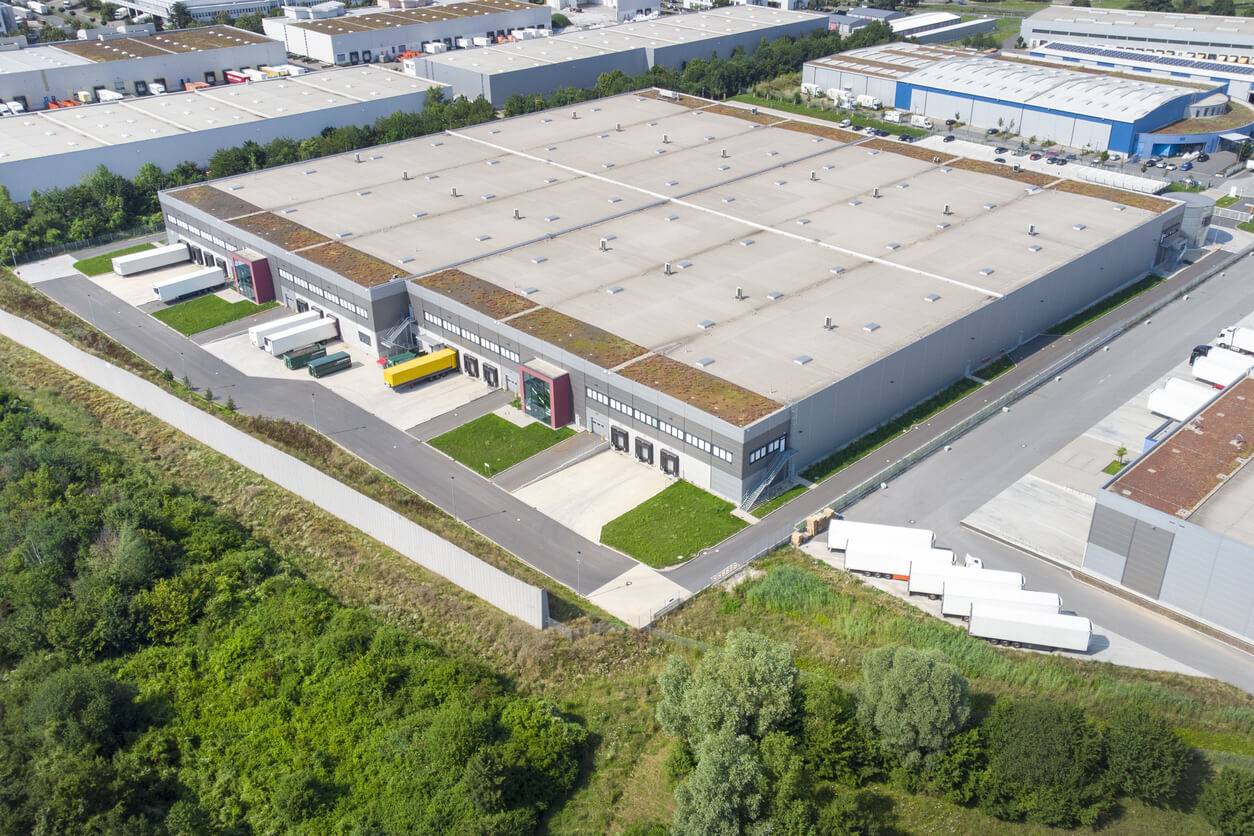
Industrial Roofing work starts with verified roof conditions, clear repair limits, and a practical decision path for the building owner.
Industrial Roofing roof scope
Little Rock's position at the confluence of I-40, I-30, and I-430 makes it the transportation hub of central Arkansas, and the industrial development that comes with that position is substantial. The Port of Little Rock on the Arkansas River provides barge access to the Mississippi River system. Bill and Hillary Clinton National Airport is central to an industrial and aviation MRO corridor on the east side. Dillard's distribution operations, Dassault Falcon Jet's MRO facility, and the industrial development in the I-40/I-30 triangle together represent a diverse mix of commercial roofing work that we've been serving for years. This market has its own climate character, 52 inches of annual rain, tornado and ice storm risk, and summer heat that doesn't relent, and the buildings here need roofing contractors who understand it.
Dassault Falcon Jet's MRO facility at Clinton National Airport is one of the most technically demanding industrial roofing environments in Arkansas. Aviation MRO facilities have specific requirements around chemicals, jet fuel, hydraulic fluids, de-icing compounds, that affect building design and the roofing systems appropriate for adjacent structures. Hot-work permitting in an aviation environment is strictly controlled, which affects which roofing systems we can use and how we stage work near aircraft operations. We've worked in aviation environments and carry the safety and access protocols required to work around active flight operations. The coordination with airport authority and the tenant before any roofing project near the runway or aircraft maintenance areas is a non-negotiable part of project planning at Clinton National.
The Port of Little Rock on the Arkansas River is a working barge port with industrial facilities that have the same marine-adjacent characteristics we see at river ports throughout the Mississippi River basin. Arkansas River humidity, industrial loading and unloading activity, and the heavy-industrial building stock that characterizes river port zones all factor into our specification approach here. The buildings at the Port of Little Rock include older masonry warehouse structures and newer distribution buildings, and the condition range between them is wide. River port buildings have often had deferred maintenance because the facilities are operationally demanding and the roof isn't the first priority, until it becomes one. We've seen some significant delayed-maintenance situations at port-area industrial buildings in Arkansas.
Arkansas's climate is more complicated than most people outside the state realize. Fifty-two inches of annual rainfall is substantial, more than most of the Midwest and close to the Gulf Coast levels. Ice storms are a real winter event in the Little Rock area: not the light frost events of more southern cities, but genuine ice accumulation events that close roads and test buildings. The ice storm of 2023 was a reminder of what Little Rock winters can deliver. And the tornado risk here is real, Arkansas is in the Mississippi Valley tornado corridor, and the I-40 industrial areas east of Little Rock sit in a documented high-frequency tornado track. We design perimeter attachment for the wind uplift exposure that this combination of ice, rain, and tornado wind risk demands.
Remington Arms' Lonoke operations, about 30 miles east of Little Rock on I-40, represent the kind of manufacturing facility where roofing work requires specific safety awareness. Ammunition and firearms manufacturing environments have hot-work restrictions that are even more conservative than chemical plants: no open flame, no spark-producing equipment, and strict protocols around any power tools used on or near the facility. We approach manufacturing facilities with hazardous materials handling the same way we approach chemical plants: by getting the facility's specific hot-work and contractor safety policy before we design the work approach, and by specifying systems and installation methods that comply with those policies without compromise.
Dillard's distribution in the Little Rock area represents the major retail logistics segment of the market. Distribution centers for national retailers have become sophisticated facilities management operations: they track building performance metrics closely, have corporate roofing standards developed across their portfolio, and expect contractors to deliver consistent quality and documentation across multiple facilities. We've worked with retail distribution clients and understand the documentation and quality control expectations. When a national retailer's corporate real estate team has a roofing standard, we meet it, and we provide the closeout documentation that their portfolio tracking systems require.
The I-40/I-30/I-430 industrial triangle encompasses a wide variety of building types from multiple construction eras. The older buildings in the heart of this triangle, particularly the masonry and steel buildings along the original freight corridor near Union Pacific's Little Rock operations, have roof histories that go back decades. Some have been maintained responsibly and have good bones under deteriorating surface systems. Others have accumulated deferred maintenance that's reached the point where the substrate conditions need attention before any new membrane work is appropriate. Core sampling and drain system inspection are standard pre-proposal protocol for us on any older Little Rock industrial building.
Planning Questions
How do ice storms in the Little Rock area affect commercial roofing systems?
Ice accumulation on commercial roofs creates both load and dam conditions. The load is concentrated at drains and low areas where ice builds up, and on buildings where drainage slope is marginal, ice accumulation can approach the roof's live load design limit. The dam condition is the more insidious problem: ice blocks drains and scuppers, backing water up behind the ice barrier. Any existing membrane vulnerability, a soft seam, a cracked flashing, becomes an active leak pathway when water is standing on top of it and has nowhere to drain. Post-ice-storm inspections that include drain clearing and surface check are a standard protocol for Little Rock industrial buildings after any significant ice event.
What are the roofing requirements for a facility near Clinton National Airport's aviation MRO operations?
Aviation facilities and their adjacent support buildings operate under FAA security requirements, airport authority contractor policies, and tenant-specific safety rules around aircraft operations. Hot-work restrictions near aircraft and fuel storage are conservative, and we design roofing specifications that work within those constraints, cold-applied adhesive systems, heat-welded thermoplastic membranes using hot-air tools rather than open flame, and self-adhered modified bitumen for flashings. Beyond the material approach, contractor access near airport operations requires coordination with the airport authority's security office, and crew identification and badging requirements apply on airport property. We manage this process routinely for aviation-adjacent roofing projects.
Does the tornado risk in Arkansas change how commercial roofs should be specified?
A direct tornado strike is a building event that exceeds any practical roofing specification, no membrane attachment system is designed to resist tornado-force winds. What we address is the elevated overall wind environment that the tornado corridor brings, including the frequent severe thunderstorm events with 60-70 mph straight-line winds that damage buildings regularly without producing a tornado. Enhanced perimeter attachment, increased fastener density at the first two rows of insulation board, full-width perimeter membrane termination bars properly anchored, and secured edge metal, significantly improves performance in the realistic wind events that central Arkansas industrial buildings see every spring. These measures are standard in our Little Rock specifications, not premium add-ons.
How do you handle roofing at a facility with hazardous materials or ammunition manufacturing?
Facilities with explosive, flammable, or hazardous material manufacturing operations are the most conservative hot-work environments we work in. Before any project begins, we obtain the facility's specific contractor safety policy and hot-work permit requirements. System specification is designed from the start to comply with those requirements, no torch-applied products, no spark-producing tools, and material selection that minimizes solvent and VOC use near product storage or process areas. Crew orientation covers the specific hazard profile of the facility. We also pre-plan emergency procedures with the facility safety officer as part of project startup. These protocols add administrative work to the project but are non-negotiable when the consequences of a safety failure are this severe.