Food Processing Facility Roofing work starts with verified roof conditions, clear repair limits, and a practical decision path for the building owner.
Food Processing Facility Roofing roof scope
Little Rock has a deep food-and-beverage manufacturing base, and most of it sits at the Port of Little Rock industrial park along the Arkansas River, the 5,000-plus-acre district that is home to the Hormel plant that is the world's only producer of Skippy peanut butter, Westrock Coffee's roasting operations, and a long roster of advanced-food tenants, with Tyson plants running just across the river in North Little Rock. These are not generic warehouses. They are processing plants with washdown sanitation, refrigeration loads, and product below the deck, and the roof on a plant like that has to answer to all three at once.
The first reality is humidity, generated indoors and piled on top of an already humid climate. Cookers, fillers, and the high-pressure hot-water washdown that sanitizes a food plant fill the interior with warm, moisture-laden air that drives straight up into the roof. Add central Arkansas's roughly fifty inches of rain a year and summer relative humidity near seventy percent, and the vapor pressure pushing into a food-plant roof assembly is severe. If the vapor retarder and insulation are not built for it, that moisture condenses inside the roof and corrodes the steel deck and soaks the insulation with no leak ever showing on the production floor.
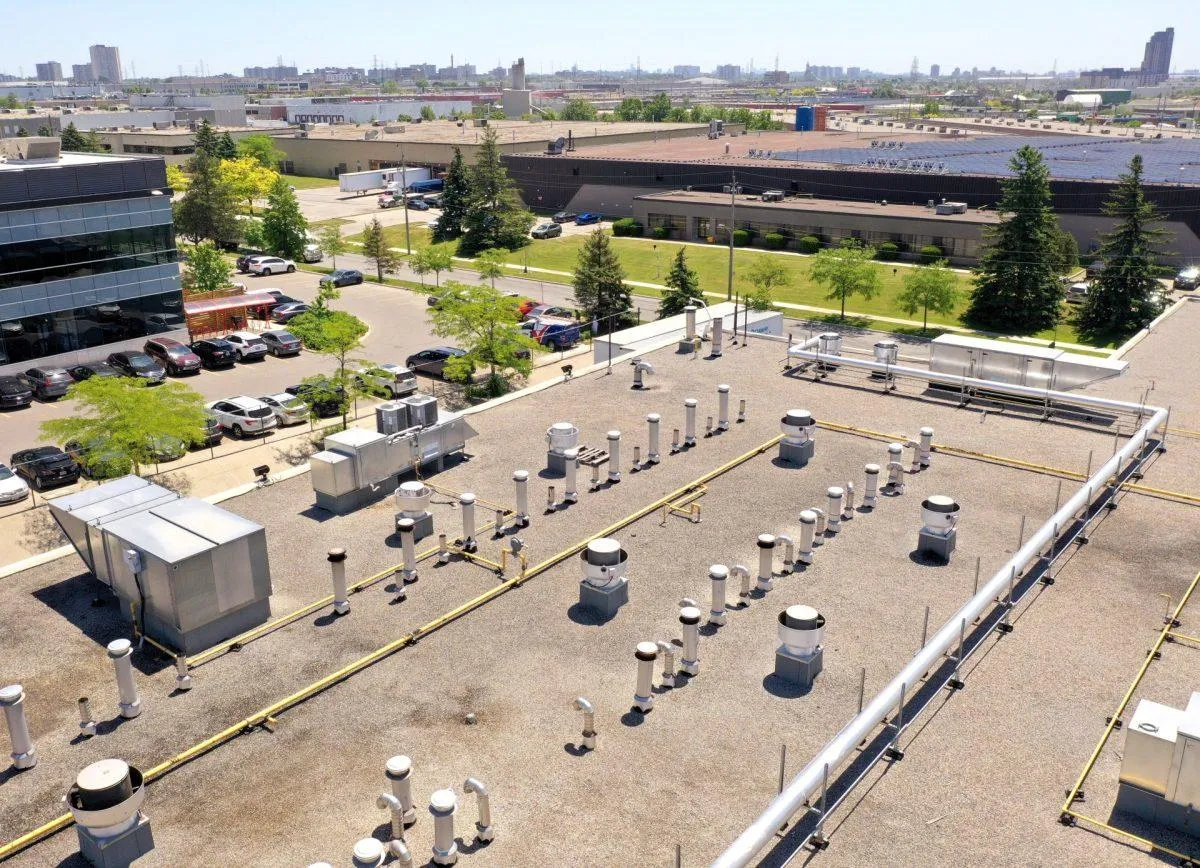
The second reality is what is sitting on top. Food plants carry heavy rooftop refrigeration, condensers, evaporative units, ammonia or glycol piping, plus large make-up air and exhaust equipment. That is real structural load and a dense field of penetrations, every one a potential leak path, and any work near the refrigeration has to be coordinated so the cold chain underneath never breaks. Over freezer rooms, blast cells, and chill spaces the assembly has to hold thermal continuity, because ponding or a thin spot over a freezer drives ice formation inside the roof and adds load the refrigeration system then has to fight.
The third reality is regulatory. Under USDA and FDA oversight, the materials we put over a food zone are not a free choice. Membranes, and just as importantly the adhesives, primers, and sealants in the flashing details, have to be acceptable for a food-production environment, many ordinary roofing adhesives are solvent-based and are not. We confirm material acceptability with the plant's QA team and the facility's food-safety plan before anything goes down over a production area.
The way a food plant is cleaned changes how the roof has to be built, especially at the edges. In wet processing areas crews wash walls and ceilings on a schedule, so the roof-to-wall flashings, the curb bases, and any termination near a sanitation zone have to shed water and resist the constant moisture rather than wick it. Pest control and food-safety auditors also look hard at the roof line for gaps, standing water, and bird-roosting spots, and a sloppy edge detail or a ponding low spot becomes a finding on an inspection that has nothing to do with whether the roof leaks. We detail terminations and drainage with that audit in mind, because on a food plant the roof is part of the food-safety envelope, not a separate system the QA team never thinks about.
Port of Little Rock plants typically run two or three shifts with one weekly sanitation window, and that window is often the only time we can open the envelope over an active line. We build the phasing around the plant's schedule, confirm with QA that the floor below is cleaned and protected before we cut, and keep every section dried in before the next shift or the next Arkansas thunderstorm arrives. Drainage gets tapered insulation where the existing slope ponds, because standing water over a freezer or a filler room is a problem we would rather design out than chase later.
Planning Questions
Can you use any membrane over a food production area?
No. USDA- and FDA-regulated plants require the membrane, plus the adhesives, primers, and sealants in the flashing, to be acceptable for a food-production environment, and many standard roofing adhesives are solvent-based and are not. We confirm acceptability with your QA team and food-safety plan before specifying anything over a food zone.
How do you keep washdown humidity from destroying the deck?
By treating the roof as a vapor-control assembly, not just a waterproof top sheet. Washdown and process steam push moisture up into the roof, and in Little Rock's humid climate it condenses inside the assembly and corrodes the deck if there is no proper vapor retarder and insulation detail. We design that assembly around your interior conditions and this climate.
How do you handle roofs over freezers and chill rooms?
Over refrigerated spaces we protect thermal continuity and drainage so water does not pond and freeze inside the assembly, which would add load to your refrigeration system and corrode the deck. Tapered insulation moves water to drains and scuppers, and any work near rooftop refrigeration is coordinated to keep the cold chain intact.
How do you schedule around a plant running multiple shifts?
We work to your sanitation window and any planned shutdowns, since that is usually the only time the envelope can be opened over an active line. QA confirms the floor is cleaned and protected before we cut, and we dry in every section before the next shift starts.