
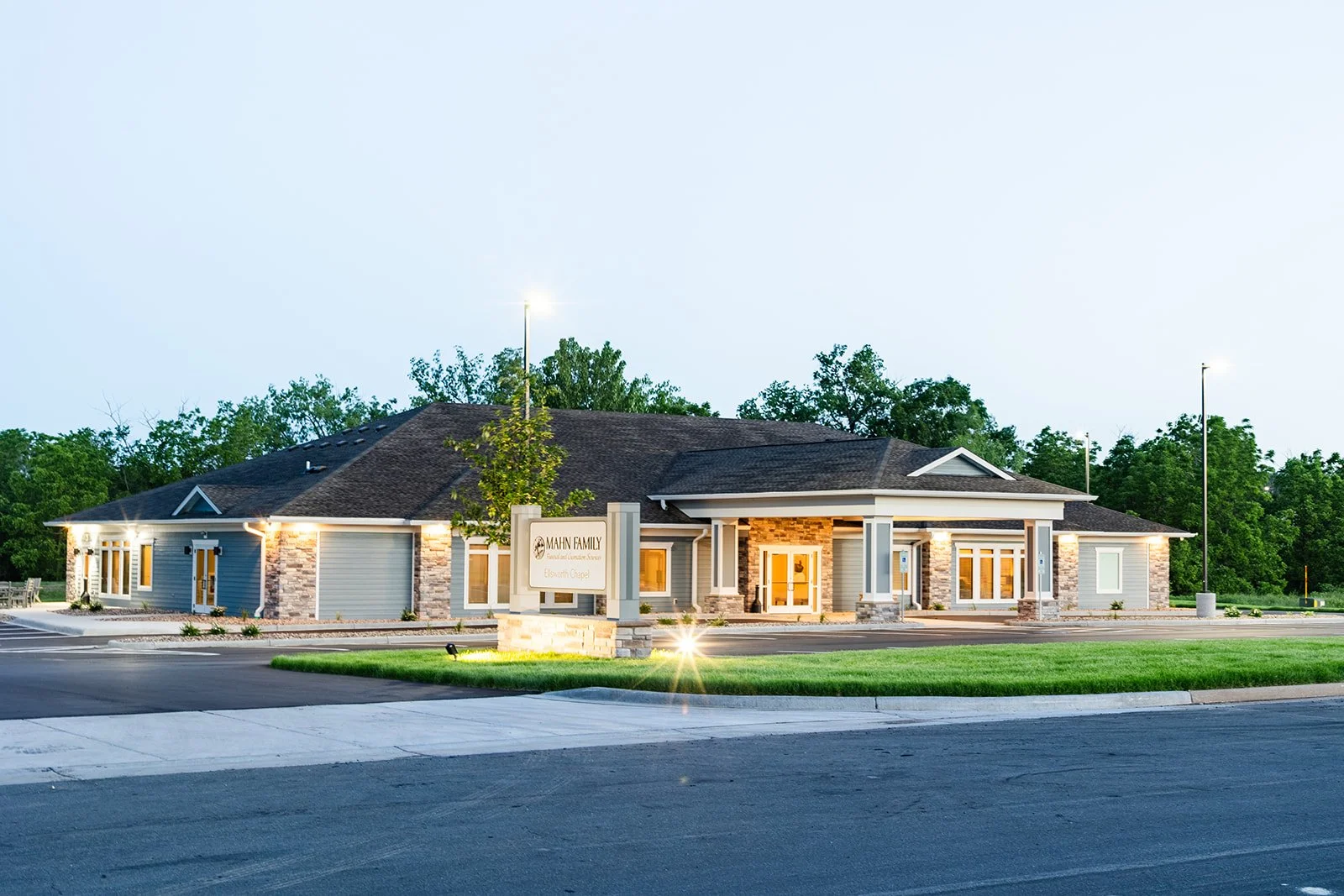
Funeral Home & Mortuary Roofing work starts with verified roof conditions, clear repair limits, and a practical decision path for the building owner.
Funeral Home & Mortuary Roofing roof scope
A funeral home is the one commercial building where the roof should never announce itself. Families arriving for a visitation on Kavanaugh Boulevard in Hillcrest, or pulling into a chapel off Cantrell Road on the way out to one of the cemeteries along the bluff, are not thinking about the building envelope and they should not have to. Our job is to keep your roof completely out of the experience: no scaffolding across the porte-cochere during a service, no compressor noise carrying into the chapel, no water stain spreading across the ceiling of a slumber room the night before a family is due. We roof funeral homes and mortuaries across Little Rock the way the rest of the building is run, quietly and on the family's schedule rather than ours.
Little Rock has a long-established funeral profession spread across the older neighborhoods south and west of downtown, with facilities clustered near MacArthur Park and the historic district, along the Cantrell and Markham corridors, and out toward the newer residential growth in West Little Rock near Chenal. Many of these buildings are decades old, sometimes converted residences or mid-century purpose-built chapels, and the roofs reflect that history. A surprising number still carry gravel-surfaced built-up roofing or an early single-ply recover sitting on a deck that was never designed for today's HVAC loads. Knowing what is actually up there before anyone quotes a number is the difference between a clean reroof and an ugly surprise mid-project.
What separates funeral home roofing from a generic office or retail flat roof is the preparation room. Embalming and prep spaces run under negative pressure and exhaust formaldehyde and other chemical vapors continuously through a rooftop stack that cannot be shut off for our convenience. Capping or temporarily idling that exhaust to make flashing easier is not on the table. We locate the prep-room exhaust during the walkthrough, treat it as its own scope line, and build the work sequence around keeping it running while we reflash the curb and rebuild the surrounding membrane. The director confirms the exhaust stays live during any work within reach of the stack, and we plan crew movement so nobody is ever working in the discharge plume.
That same chemistry matters for material selection. Sustained vapor exposure around the stack is hard on ordinary edge metal and some adhesives over time, so we specify flashing and termination details that hold up to it rather than a standard curb wrap that looks fine on day one and corrodes from the inside.
Funeral home chapels are often clear-span rooms carrying 40 to 60 feet of roof with no interior column to break it up, the same long-span condition you find under a church sanctuary. Those bays move and flex under wind uplift differently than a small office bay, so the fastening pattern and membrane attachment have to be designed for the actual span and deck rather than copied from a generic detail. Where the deck is wood, which is common in older converted chapels here, we confirm it can carry the insulation and attachment loads before we finalize the assembly.
The porte-cochere is the other defining feature. Almost every funeral home in Little Rock has a covered drive where families are received out of the weather, and the transition where that canopy ties into the main building wall is the most reliable place to find a chronic leak. Thermal movement, differential settlement, and decades of runoff concentrate right at that joint. We evaluate the canopy roof and its wall transition as a distinct item on every funeral home inspection, because patching the field membrane and ignoring the canopy joint just relocates the drip.
There is no slow season and no empty week at a funeral home. Visitations run into the evening seven days a week, services land on short notice, and the building has to look composed every single morning. We schedule against the director's calendar, get advance notice of services and visitations, and sequence the work so active areas, the chapel, the main entrance, and the family parking, are clean, quiet, and protected during any gathering. The roof is dried in and watertight before the building closes each evening, every evening, because a funeral home cannot reschedule a family around a tarp.
Planning Questions
What decides the right funeral home & mortuary roofing path?
The roof assembly, leak history, drainage, access, rooftop equipment, and operating risk below the roof all shape the recommendation.
Can work be phased around occupied spaces?
Yes. The scope should identify tenant-sensitive areas, daily dry-in expectations, access routes, and weather limits before production starts.
What documentation should ownership expect?
Photo records, repair notes, roof-area observations, product information when applicable, and a clear summary of remaining roof risks.