
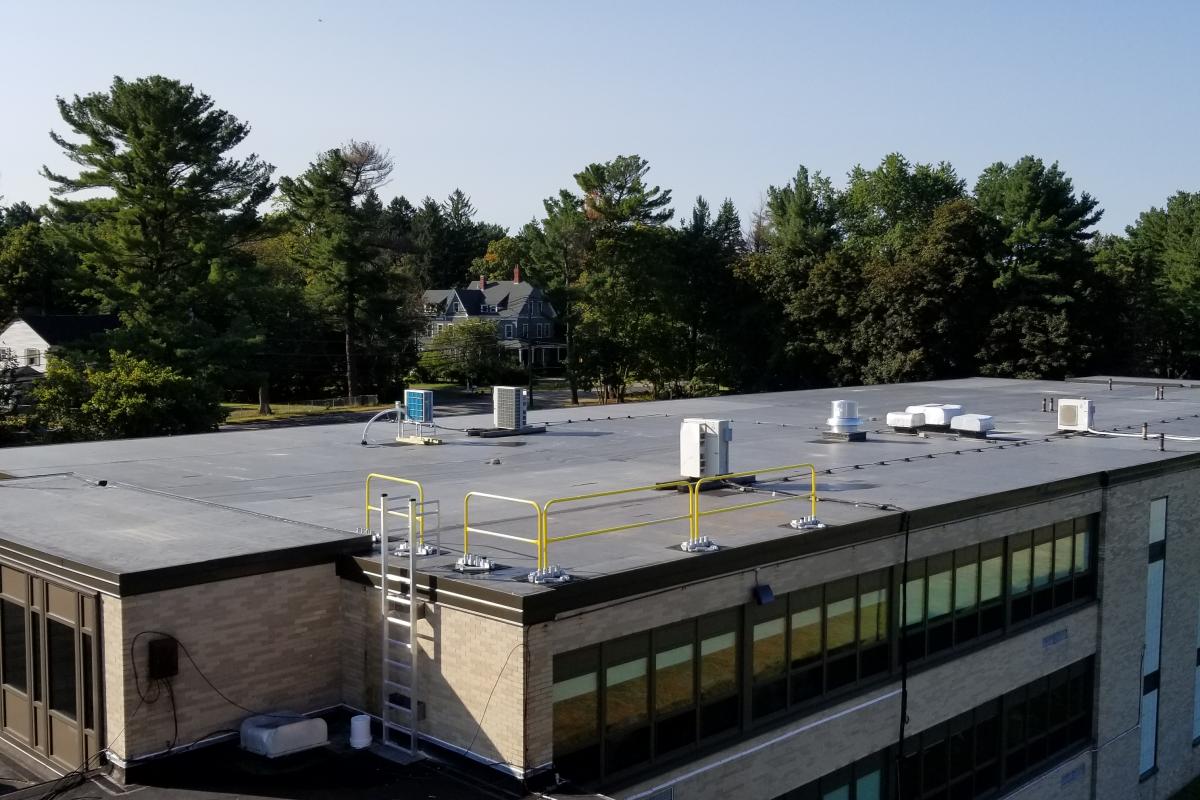
Government and Municipal Building Roofing work starts with verified roof conditions, clear repair limits, and a practical decision path for the building owner.
Government and Municipal Building Roofing roof scope
Little Rock's government buildings tell a compressed history of Arkansas architecture, from the Greek Revival Old State House on Markham Street, now a museum managed under state stewardship, to the utilitarian concrete construction of the Pulaski County Courthouse complex and the newer addition to Little Rock City Hall that introduced curtain wall elements to a predominantly masonry civic campus. Roofing any of these structures requires a contractor who has absorbed the City of Little Rock's procurement rules, which distinguish between the city's own capital projects managed through the Public Works Department and county-level work administered separately by Pulaski County Purchasing. Submitting a bid packet designed for one entity to the other is a common misstep that disqualifies otherwise capable firms before technical evaluation even begins.
The Arkansas River corridor and central Arkansas weather patterns combine to create a particularly aggressive roofing environment for Little Rock's municipal buildings. Summer thunderstorms track up the river valley with enough regularity that hail events exceeding one inch in diameter hit the metro area multiple times annually, and Little Rock fire stations along Cantrell Road and Asher Avenue have sustained documented hail damage to modified bitumen roofing on their low-slope apparatus bay roofs. Contractors bidding Little Rock government work should review the city's insurance claim history during pre-bid conferences, because roof systems that performed poorly in prior hail events will prompt specifications requiring higher impact-resistance ratings, often UL 2218 Class 4 on sloped sections.
Little Rock's public library system, driven by the Main Library on Louisiana Street and expanded through the Central Arkansas Library System's branch network, presents roof replacement complexity that goes beyond sheer square footage. CALS facilities are governed by the Pulaski County Quorum Court's capital budget on some branches while city funding covers others, creating a patchwork of procurement authority that contractors must navigate carefully. The Roberts Library, the Adolphine Fletcher Terry Branch, and the Sue Cowan Williams Branch each sit in neighborhoods with active community investment boards that sometimes weigh in on visible roofing changes like coating colors or parapet cap replacements during public comment periods tied to larger renovation grants.
Federal funding flows heavily into Little Rock's municipal infrastructure through Arkansas's allocation of Community Development Block Grant dollars, HUD programs tied to the city's history as a designated Entitlement Community, and federal transit funding for facilities supporting the Rock Region METRO system. Every project drawing on those sources triggers Davis-Bacon Act prevailing wage requirements, and Little Rock's Public Works staff have become increasingly rigorous about enforcing weekly certified payroll submissions after a compliance audit several years ago found inconsistencies in a prior public building renovation contract. Roofing subcontractors are equally bound by those requirements, and prime contractors who fail to ensure subcontractor payroll compliance share the liability.
Little Rock City Hall and the Little Rock Police Department headquarters on West Markham both demonstrate how government buildings concentrate operational functions that cannot tolerate weather intrusion during roofing work. The police department's evidence storage areas and the city's IT infrastructure rooms require temporary weather protection systems, typically reinforced poly tarp systems on engineered frames, during membrane tear-off, and those temporary systems must be installed before any existing roofing is removed. Little Rock's standard government construction contracts specify that temporary weather protection plans must be submitted and approved by the facility manager before mobilization, and the cost of those systems is contractor-borne regardless of whether they appear explicitly in bid documents.
Arkansas's historic preservation framework, administered through the Arkansas Historic Preservation Program under the Department of Arkansas Heritage, governs roofing work on any city or county building that appears on or is eligible for the National Register. Little Rock has a dense concentration of eligible public buildings because the city served as Arkansas's capital and commercial center during the late 19th and early 20th centuries, when substantial civic construction occurred. Contractors working on eligible buildings must follow Secretary of the Interior Standards, and the AHPP review timeline, which can run eight to twelve weeks for significant projects, must be factored into project scheduling well before bid advertisement. Failure to obtain required AHPP approvals prior to construction has resulted in stop-work orders on Little Rock public building projects in the past.
Bonding capacity requirements for Little Rock municipal roofing work start at performance and payment bonds equaling 100 percent of contract value on projects above $20,000, consistent with Arkansas Code Annotated § 22-9-401 governing public contracts. Bid bonds at five percent accompany sealed submissions, and the surety must be licensed to do business in Arkansas. Little Rock's purchasing office verifies surety licensing against the Arkansas Insurance Department's database, and bonds from unlicensed sureties are treated as missing documents rather than correctable defects, meaning the bid is rejected outright. Contractors working across the state line from Memphis or Texarkana should confirm their surety's Arkansas licensing status well ahead of submission deadlines.
Planning Questions
What decides the right government and municipal building roofing path?
The roof assembly, leak history, drainage, access, rooftop equipment, and operating risk below the roof all shape the recommendation.
Can work be phased around occupied spaces?
Yes. The scope should identify tenant-sensitive areas, daily dry-in expectations, access routes, and weather limits before production starts.
What documentation should ownership expect?
Photo records, repair notes, roof-area observations, product information when applicable, and a clear summary of remaining roof risks.