
Solar Roof Integration work starts with verified roof conditions, clear repair limits, and a practical decision path for the building owner.
Solar Roof Integration roof scope
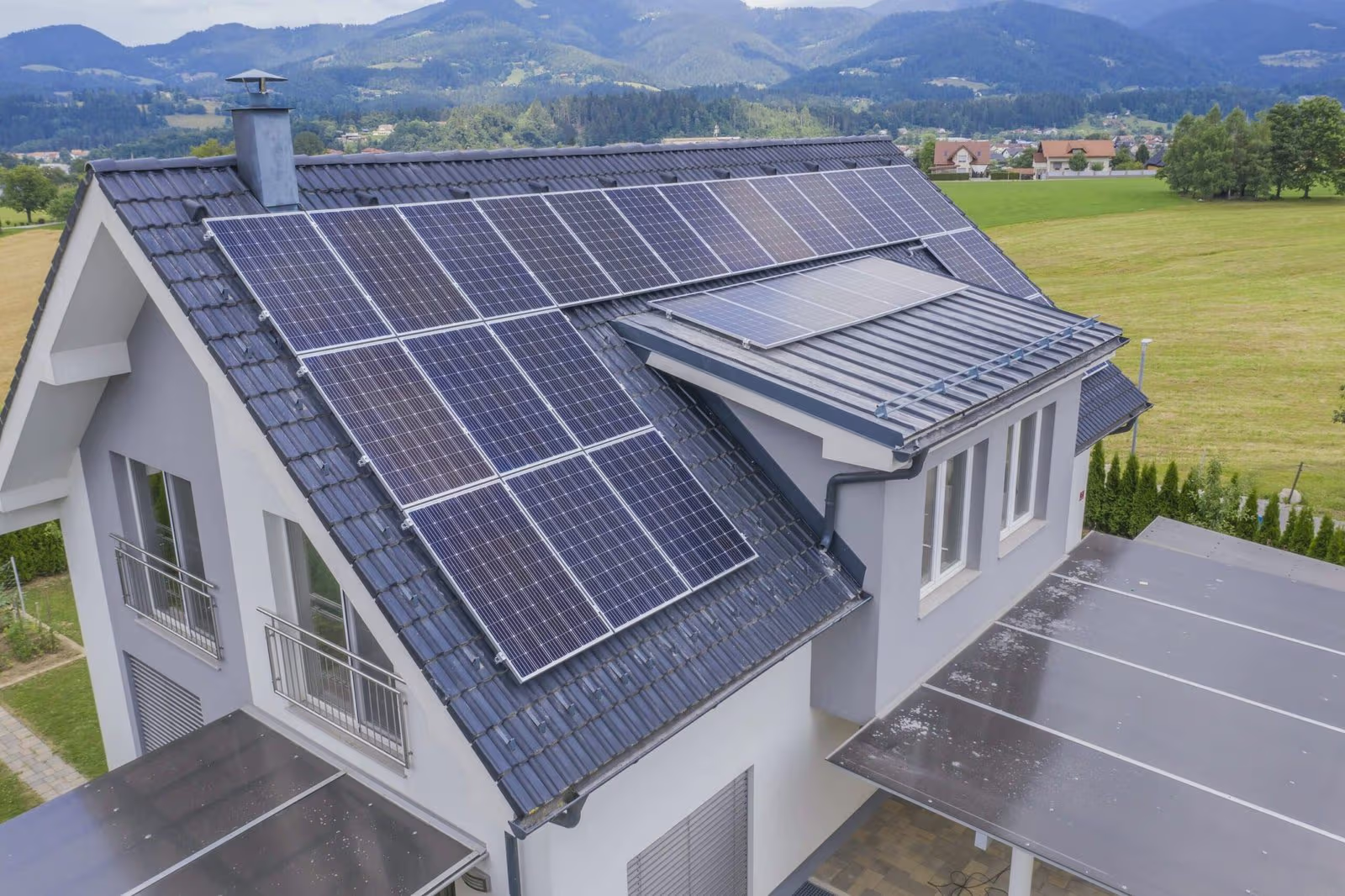
A rooftop photovoltaic array and the membrane underneath it are bound together for the next quarter century, and the part most owners underestimate is which one fails first. We get called onto buildings all over the city once a solar proposal is already on the table: distribution centers feeding the Little Rock Port Authority terminals off Lindsey Road, office and medical buildings along the Chenal Parkway corridor in west Little Rock, retail boxes ringing the I-430 and I-630 interchange, and warehouses in the Interstate 30 industrial belt south of downtown. In nearly every case the panels are not our concern. The watertight assembly they bolt to, and the warranty that protects the owner when something leaks, is the work we own.
Most commercial modules carry a 25-year output warranty. A large share of the single-ply and gravel-surfaced roofs we core on older buildings near the downtown core and the Clinton National Airport freight ramps have eight to twelve years left. Set a 25-year array on a roof that quits in year ten and the owner pays to remove every panel, replace the membrane, and reinstall the whole field, a teardown that routinely adds tens of thousands of dollars to a reroof that could have been done once. Before anyone signs a solar contract we pull cores, run an infrared moisture scan, and put a written remaining-service-life number in the owner's hands. If the roof is near the end, the math almost always favors reroofing first and landing the array on a fresh surface that will outlive the panels.
There are two ways to hold an array down on a low-slope roof, and each trades one risk for another in central Arkansas. Ballasted racking weighs the system down with concrete pavers and never pierces the membrane, which protects the roof but stacks roughly four to six pounds per square foot of dead load on the deck on top of the panels. Mechanically attached racking bolts through the membrane into the structure, which resists wind far better but creates a flashed hole at every stanchion. Little Rock sits in a part of the state that takes severe spring thunderstorms and straight-line winds most years, so uplift is not a detail to wave off. We require the building's structural engineer to confirm a ballasted load before it is specified, and where attachment is the right call we flash every foot with a manufacturer-approved pre-molded boot or pitch pocket so the penetration stays sealed for the life of the roof, not just through the punch list.
Not every membrane behaves well beneath an array. A reflective white TPO or PVC sheet runs cooler under the modules and gives back a small bump in output, while a dark EPDM roof can push surface temperatures high enough to age the sheet and the racking feet prematurely. There is also a chemistry problem: the plasticizers in some PVC membranes react badly with the rubber components on certain racking systems, degrading both over time. We confirm that compatibility before a single block of ballast is placed. We also lay out walk pads from the roof hatch to every inverter, combiner, and string the maintenance crew will touch, because foot traffic on bare membrane around an array is one of the most reliable ways to create a leak that did not exist on day one.
The DC and AC conduit that carries power from the array to the inverters and down into the building service almost always crosses the roof, and that crossing is where the roofing and solar trades collide. Conduit strapped flat to the membrane saws into it as the roof expands and contracts through Arkansas's wide seasonal temperature swing, and any run that drops through the deck on a generic rubber boot becomes a recurring leak inside a few seasons. We sit down with the solar electrician during preconstruction and locate every penetration, flash each one with a proper through-roof detail before wire is pulled, and set horizontal runs on raised supports that keep PVC off the sheet. On the humid Arkansas River plain we also make sure conduit low points drain away from penetrations instead of pooling condensation right at them.
The most common avoidable failure in commercial solar is letting a solar crew work on a warranted roof without looping in the membrane manufacturer. Carlisle, GAF, Johns Manville, and Versico all publish solar-ready requirements, and most demand a preinstallation review and an authorized contractor for the roof warranty to survive the work. We register that review, document the approved racking and protection details, and sequence the build so the membrane is installed and inspected before racking lands and the final roof inspection happens after the array is set. The owner ends up holding a roof warranty and a solar warranty that line up, instead of two documents that point at each other the first time water shows up on a ceiling tile.
Federal investment tax credits and Entergy Arkansas net metering have made commercial rooftop solar genuinely attractive to Little Rock owners, and the calls come most often from warehouse tenants near the Port and from office and medical buildings out west. The economics hold up, but only on the assumption of a roof that carries the system without surprises, and a feasibility study that skips the roof is half a study.
Planning Questions
What decides the right solar roof integration path?
The roof assembly, leak history, drainage, access, rooftop equipment, and operating risk below the roof all shape the recommendation.
Can work be phased around occupied spaces?
Yes. The scope should identify tenant-sensitive areas, daily dry-in expectations, access routes, and weather limits before production starts.
What documentation should ownership expect?
Photo records, repair notes, roof-area observations, product information when applicable, and a clear summary of remaining roof risks.