
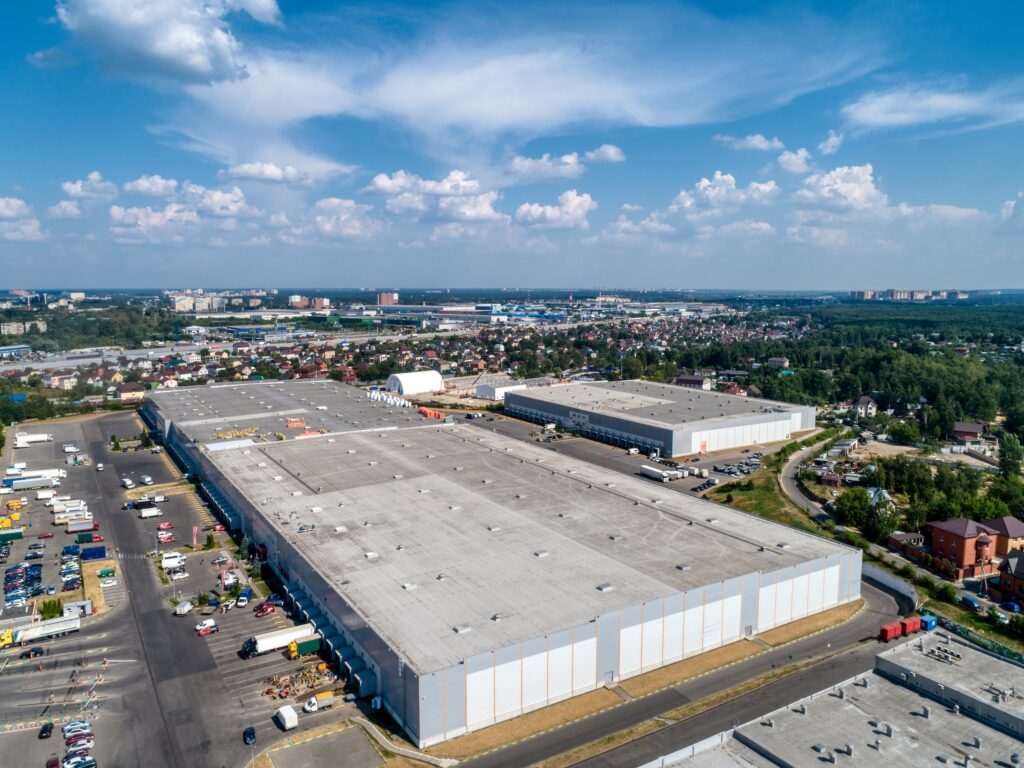
Warehouse and Distribution Center Roofing work starts with verified roof conditions, clear repair limits, and a practical decision path for the building owner.
Warehouse and Distribution Center Roofing roof scope
Dillard's distribution center on Shackleford Road in Little Rock anchors the city's industrial west side and illustrates the scale of roofing challenge that major distribution facilities face in Central Arkansas. A building of that footprint, processing millions of garments and home goods annually, cannot tolerate a roof leak. The roofing system has to handle the region's tornado-season wind loads, summer heat that drives surface temperatures well above 150°F on dark membranes, and rainfall events that routinely dump two or more inches in under an hour. Getting that system right, and keeping it right through annual maintenance, is a non-negotiable operating cost for any large warehouse operator in Little Rock.
Arkansas weather is hard on commercial roofs in ways that require specific design choices. Little Rock sits in a zone that sees both Gulf moisture systems pushing north from the south and cold fronts driving down from the plains, which means the city averages around 50 inches of rainfall per year, regularly sees severe thunderstorm systems with 60-mph winds, and experiences enough freeze-thaw cycles each winter to stress membrane seams. TPO has become the preferred membrane for most new warehouse construction in the Little Rock metro because heat-welded seams resist wind uplift better than adhesive-bonded systems, and the white surface keeps cooling loads manageable through Arkansas's long, humid summers. EPDM remains common on older buildings and performs acceptably when kept clean and reseamed at the first sign of seam separation.
Drainage design for a large Little Rock warehouse must treat the region's intense convective storms as the design event, not a rare outlier. A 100-year storm event in Pulaski County produces rainfall intensity exceeding 6 inches per hour for short durations. Primary internal drains sized to handle only average rainfall will be overwhelmed by these events, and secondary overflow scuppers must be installed at code-required elevations and sized generously. On older buildings in Little Rock's industrial parks near I-30 and I-430, clogged drains are the leading cause of emergency roof failures. A quarterly drain-clearing program is the single highest-return maintenance activity a warehouse operator can perform.
Dock penetration flashing at Little Rock distribution facilities must account for both the large volume of through-roof penetrations typical of high-throughput DCs and the aggressive storm events the region sees. Each conduit bundle, electrical riser, and sprinkler main that penetrates the roof deck needs to be flashed with a pre-fabricated pitch boot or metal pitch pocket appropriate for the penetration geometry. Flexible pipe boots seal well in moderate climates but can crack in temperature extremes; in Little Rock's climate, EPDM pitch boots with UV-resistant coating tend to outlast standard neoprene products by several years.
Forklift exhaust and battery charging stations in Little Rock warehouses create rooftop ventilation requirements that must be coordinated with the roofing system. Propane exhaust stacks must be positioned so that prevailing southerly winds carry exhaust away from rooftop HVAC intakes, and the flashing around high-temperature exhaust stacks should use metal pitch pockets with high-temperature silicone sealant rather than standard pourable sealer, which softens in summer heat and can separate from the stack. On battery charging areas, hydrogen ventilation stacks should be flashed to the same standard and inspected for corrosion annually.
Energy efficiency matters to warehouse operators in Little Rock because Arkansas summers run long and hot. A large refrigerated or climate-controlled DC can see meaningful utility savings from a white TPO or coated EPDM roof compared to a black membrane. Entergy Arkansas does not currently offer a formal cool roof rebate program, but the energy savings from reduced peak cooling demand are real: studies of similar climates show 10–20% reductions in cooling energy use after a dark-membrane replacement with white TPO. For a 500,000-square-foot facility running refrigerated storage, that represents tens of thousands of dollars annually.
The choice between TPO and EPDM for a Little Rock warehouse recover often comes down to the existing substrate condition and the owner's budget. EPDM recover systems are generally less expensive to install and can be adhered over a wide range of substrates. TPO recover systems cost more but deliver better energy performance and arguably better long-term seam integrity in Arkansas's temperature extremes. Either system should be installed over a layer of polyiso insulation to bring the assembly to minimum R-25 per Arkansas energy code for commercial buildings.
Planning Questions
What decides the right warehouse and distribution center roofing path?
The roof assembly, leak history, drainage, access, rooftop equipment, and operating risk below the roof all shape the recommendation.
Can work be phased around occupied spaces?
Yes. The scope should identify tenant-sensitive areas, daily dry-in expectations, access routes, and weather limits before production starts.
What documentation should ownership expect?
Photo records, repair notes, roof-area observations, product information when applicable, and a clear summary of remaining roof risks.